
Nardi Alloro & Libeccio Table Range
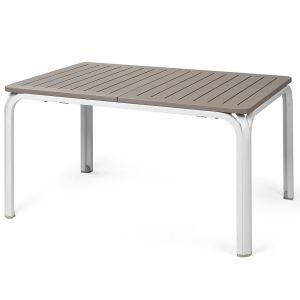
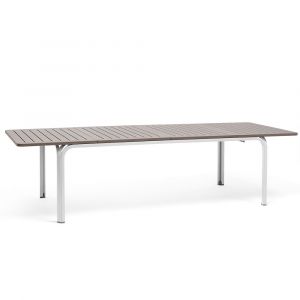
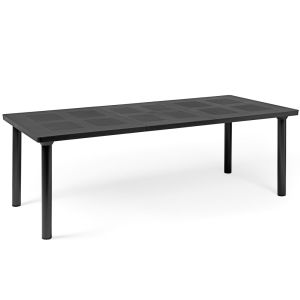
The Nardi Alloro and Libeccio range covers extendable resin dining tables built for households and venues that need a table to grow with the guest list. The Libeccio extends to 160cm and comes in Anthracite, Tortora and White, while the Alloro range offers two extension spans — 140-210cm and 210-280cm — in the same three finishes, plus a White/Tortora two-tone option on the larger size. Both use Nardi's resin construction, so there's no timber to seal or metal to rust.
Choosing between them comes down to how many extra seats you need: the Libeccio suits smaller settings that occasionally need a bit more length, while the 210-280cm Alloro is built for entertaining larger groups without needing a second table. Check your dining area's floor space at full extension before ordering, since the largest Alloro adds close to a metre of length when fully opened.
Need help finding the right outdoor table? Visit us in store — Campbelltown NSW (02) 9332 9192 or West Melbourne VIC (03) 9070 8962. Mon–Fri 9:30am–5pm, Sat 10am–2pm.

Nardi Alloro & Libeccio Table Range - FAQs
-
What is the difference between the Libeccio and Alloro extendable tables?
The Libeccio has a distinctive square panel resin top with an integrated parasol hole and extends from 160cm, seating up to 6, to 220cm, seating up to 8, weighing 29kg. The Alloro range comes in two sizes, the Alloro 140 extending from 140cm to 210cm, seating 6 to 8 at 34kg, and the larger Alloro 210 extending from 210cm to 280cm, seating up to 12 at 45kg in a two tone White and Tortora finish. Choosing between them depends on maximum guest numbers needed and whether a parasol hole through the tabletop matters for shade.
-
How does the extension mechanism work on these Nardi tables?
Each table has an integrated extension leaf built into the top rather than a separate leaf to store elsewhere. Pulling the top apart lifts the extra section into place in seconds, so no loose parts need finding or storing separately when a venue wants to seat extra guests. This mechanism is identical across the Libeccio, Alloro 140 and Alloro 210, so the effort needed to extend any table in this range is the same regardless of size. Closing the table back down afterwards is just as quick, folding the leaf back under the main top rather than removing it.
-
What are the Libeccio and Alloro tables made from?
Both the Libeccio and Alloro tables have a polypropylene resin top on a powder coated aluminium frame, rather than a timber or glass surface. The aluminium frame will not rust outdoors, and the resin top resists fading and staining without oiling or sealing across repeated seasons of sun and rain exposure. This construction is the same across all three sizes in the range, the Libeccio, Alloro 140 to 210 and Alloro 210 to 280, so the choice between them comes down to seating capacity and finish rather than any difference in material durability or outdoor performance.
-
How many people does the largest Alloro table seat?
The Alloro 210 to 280 model seats up to 12 people at its full 280cm extension, making it the largest table in this range, while the 210cm closed length still comfortably seats 8. This compares with the smaller Alloro 140 to 210, which seats 6 to 8, and the Libeccio, which seats 6 to 8 across its 160cm to 220cm extension. A venue or household regularly entertaining larger groups would suit the Alloro 210 to 280 as its everyday table, rather than relying on the extension leaf occasionally on a smaller model to reach the same guest numbers.
-
What colours are the Alloro extendable tables available in?
The Alloro 210 to 280 model is available in an elegant two tone White and Tortora finish, which is not offered on the smaller sizes. The Libeccio and the Alloro 140 to 210 are instead available in single colour options, Anthracite, Tortora and White. Check the individual product page for the current colour options and stock availability across the Alloro and Libeccio sizes, since finishes can vary between the different table lengths. Choosing the largest Alloro therefore brings a distinct two tone look alongside its larger seating capacity, rather than just a bigger version of the same finish.
-
Does the Libeccio table have a parasol hole?
Yes. The Libeccio has an integrated parasol hole through its square panel top, which the Alloro range does not carry, so if shade over the table matters, the Libeccio is the model to choose. This makes the Libeccio suited to an exposed courtyard or balcony where an umbrella is needed through the middle of the table, while the Alloro range, without a parasol hole, suits a covered outdoor area or a dining space where shade is already provided by a roof or pergola. Both ranges share the same extendable resin and aluminium construction otherwise.
-
Can these Nardi tables stay outside all year?
Yes. The aluminium frame and resin top used across the Libeccio and both Alloro sizes are designed for permanent outdoor use, needing nothing beyond an occasional wipe down to stay in good condition. Neither requires covering, oiling or sealing through the seasons, and the powder coated aluminium frame will not rust from repeated rain exposure. This durability is consistent across the whole range regardless of size, so the choice between the Libeccio, Alloro 140 to 210 and Alloro 210 to 280 comes down to seating capacity, parasol hole and finish rather than any difference in weatherproofing.
-
How many people does the Nardi Libeccio table seat at each length?
The Libeccio seats up to 6 guests at its closed 160cm length and up to 8 once extended to 220cm using the integrated leaf. This makes it a mid-size option between the smaller Alloro 140, which also seats 6 to 8, and the largest Alloro 210 to 280, which reaches 12 seats. The Libeccio's distinguishing feature alongside its seating capacity is the integrated parasol hole through its square panel top, which neither Alloro size carries, so shade coverage is a factor worth weighing against seating numbers.
-
What is the weight difference between the Libeccio, Alloro 140 and Alloro 210 tables?
The Libeccio weighs 29kg, the Alloro 140 to 210 weighs 34kg, and the largest Alloro 210 to 280 weighs 45kg. The weight increases with the table's closed and extended length, since a longer aluminium frame and larger resin top are needed to support more seats. All three use the same powder coated aluminium frame and polypropylene resin top construction, so the difference in weight reflects size and seating capacity rather than a difference in material quality or durability between the models.
-
How many seats does the smaller Alloro 140 to 210 table add when extended?
The Alloro 140 to 210 seats up to 6 guests at its closed 140cm length and up to 8 once extended to 210cm, using the same integrated extension leaf mechanism as the rest of the range. This makes it the smallest extending table in the Alloro and Libeccio collection, suited to a household or venue that mostly needs a compact table but occasionally hosts extra guests, rather than the largest Alloro 210 to 280, which is built around entertaining bigger groups as its everyday size.
-
Is the two tone White and Tortora finish available on more than one table in this range?
The two tone White and Tortora finish is specific to the largest Alloro, the 210 to 280cm model, giving it a distinct look from the single colour options, Anthracite, Tortora and White, available on the Libeccio and the Alloro 140 to 210. Choosing the largest Alloro is therefore also a styling decision as well as a seating capacity one, since it is the only size in the range offered in this two tone combination rather than a plain single finish.
-
How much floor space should I allow for the largest Alloro table at full extension?
The Alloro 210 to 280 adds close to a metre of length when the extension leaf is pulled out, going from 210cm closed to 280cm fully extended. Checking a dining area's floor space at the full 280cm length before ordering is worth doing, since the closed 210cm footprint alone will understate how much room the table needs once extended for a large group. The Libeccio and Alloro 140 to 210 extend by a smaller amount, 60cm and 70cm respectively, so need comparatively less clearance.

- Shop by Colour White Remove This Item
- Shop by Colour Grey / Taupe Remove This Item
